

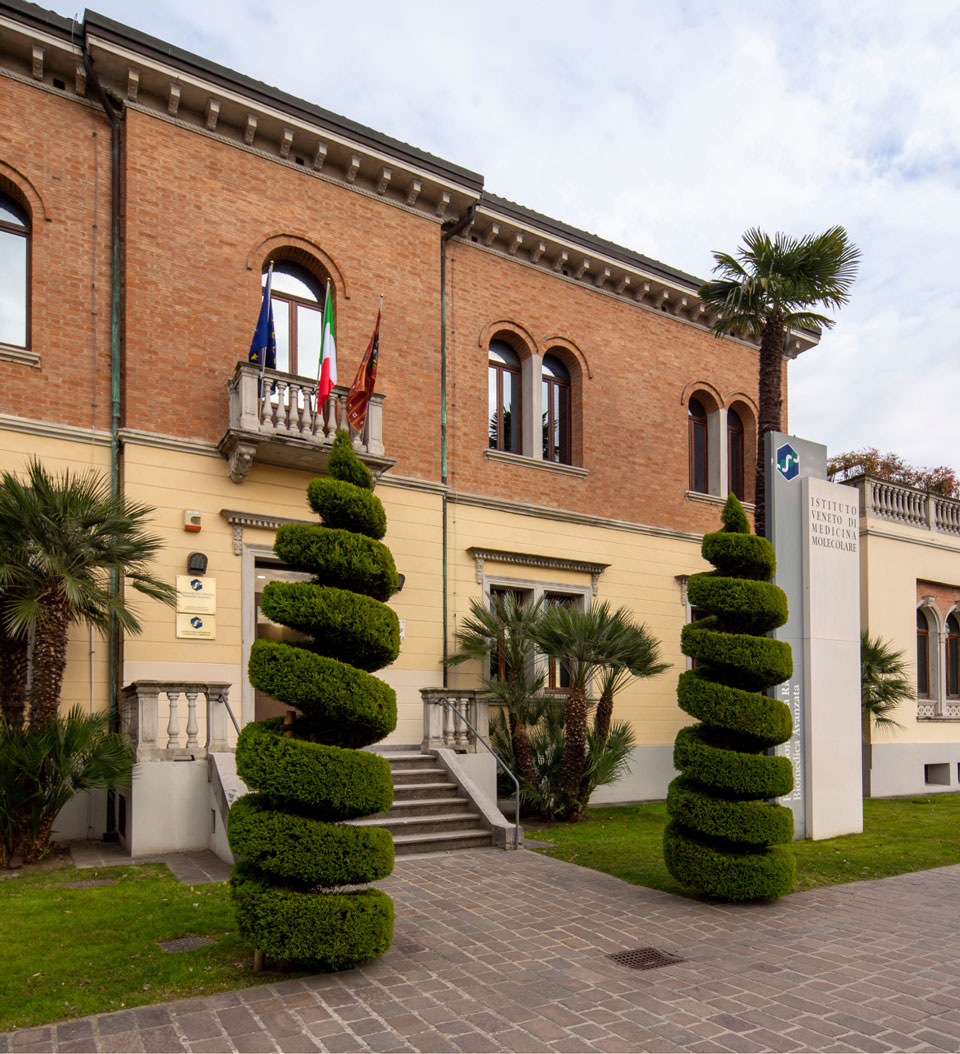


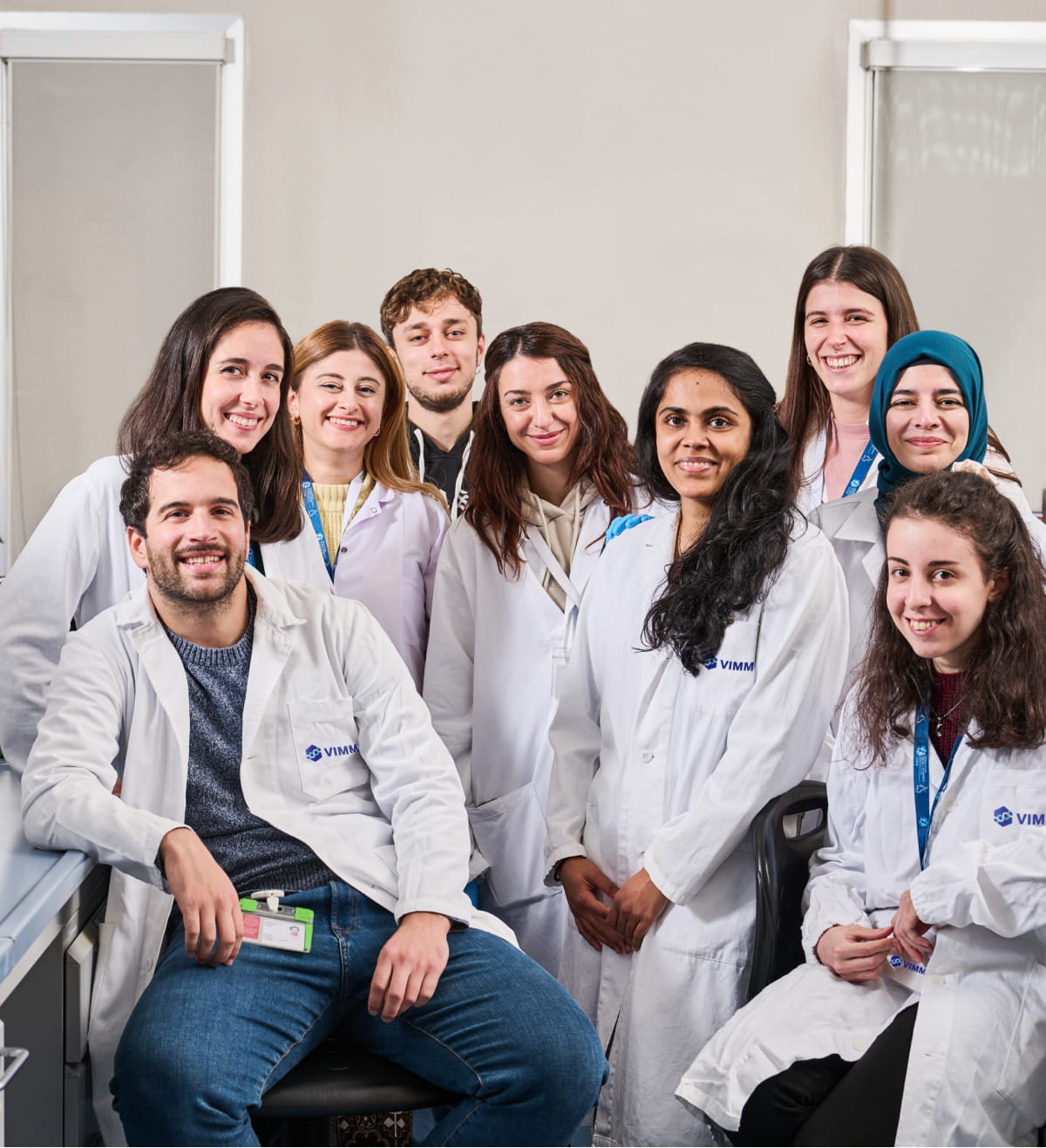
Following the extensive interview with Francesco Micheli, featured in the December issue of VIMM News, this edition hosts a conversation with Nicola Elvassore, who reflects on his two years as Scientific Director, sharing insights on VIMM’s current progress, upcoming goals for 2025, and his views on the state of scientific research in Italy.
Enjoy the reading!
Nicola Elvassore, it’s been just over two years since you became Scientific Director of VIMM. What has happened during these 24 months?
It has been an intense and exciting period, during which we have faced many challenges and worked tirelessly to make VIMM an increasingly recognized and appreciated center of excellence. We have advanced research in many fields, received major acknowledgments and funding from leading Italian and European institutions, increased the number of publications, and completely renewed the Scientific Advisory Board, which oversees the scientific activity conducted within our Institute.
We are in a good place, even if there is still much to be done — not only from a scientific standpoint. Managing and coordinating the daily work of a team of 260 researchers and 12 Principal Investigators is no easy task, especially in terms of defining objectives, timelines, and the tools we intend to use to achieve them.
What are the main changes you wanted to introduce in your term as Scientific Director, and what results are they bringing?
One of the distinctive elements that makes VIMM a multifunctional center of excellence is the willingness to explore multiple lines of research: from neuroscience to oncological diseases, from muscular and skeletal disorders to the study of cells and mitochondria, including metabolism and molecular medicine — our teams explore a wide range of biomedical research areas every day.
One of my key objectives as Scientific Director has been to focus the Institute’s energy and resources, streamlining our research lines from over twenty to five main areas. This allows us not only to sharpen our focus but also to enhance the diverse expertise that coexists within VIMM, fostering a shared approach aimed at understanding the causes of diseases and developing therapeutic pathways to improve quality of life.
In one sentence: to conduct excellent research and put it at the service of people.
With so many young researchers and laboratories specializing in different areas, how do you keep everyone focused?
By helping them understand the value of what we do every day. Being a researcher requires immense patience, precision, and resilience. It can be difficult at times, but when we identify a correlation or uncover a cellular mechanism that could lead to promising therapeutic developments, it’s an incredibly rewarding moment.
One thing I’ve learned, also through teaching at the University, is that to motivate young people and help them give their best, rules and codes of conduct aren’t enough — what truly matters is the ability to transmit passion, enthusiasm, and a sense of belonging.
Speaking of achievements — in just a few years, five VIMM researchers have received funding from the European Research Council (ERC). Who deserves the credit?
The credit goes to an extraordinary team and to their ability to conduct high-level research across various topics. Without a doubt, VIMM offers an ideal environment for scientific work — rich in synergy and collaboration, thanks to shared spaces and interdisciplinary projects. Other key factors include the territory and our partners: Padua boasts a university of international prestige, alongside local institutions and a supportive community that provides funding and understands the rhythms and needs of scientific work. This combination has created a network of top-tier research centers, ideal for building expertise, attracting talent, and supporting long-term projects.
Let’s talk about your own research. What is your focus?
My research focuses on stem cell engineering and the creation of reliable in vitro models to study human development and disease. My lab combines interdisciplinary expertise in biology, biotechnology, materials science, and engineering to develop micro-engineered tools and innovative biomaterials. We work on human pluripotent stem cells, with particular attention to cell reprogramming, 3D self-organization, and differentiation, with the goal of generating artificial tissues and organoids. In summary, our work aims to better understand the molecular basis of diseases and to create advanced models that can support biomedical research and the development of new therapies.
What will 2025 look like for VIMM? What will the research focus on?
2025 will be a year of consolidation and growth for VIMM, with a strong emphasis on translational research and technological innovation applied to biomedicine. We will develop both national and European projects across all research lines and aim to strengthen international collaborations and synergies with academic and clinical institutions, accelerating the application of our discoveries in the medical field. Our goal is to continue producing cutting-edge knowledge that can have a concrete impact on the understanding and treatment of diseases.
What does VIMM still need to do even better?
VIMM doesn’t lack ideas, projects, or determination. What we lack are time and resources to achieve everything we envision within our desired timeframe — a challenge familiar to anyone in research. From an infrastructure perspective, thanks to the efforts of the past two years and the support of our partners, we’ve closed a significant gap and can now compete with leading research centers worldwide.
And what about research in Italy? What is missing there?
Perhaps courage — and a long-term strategic vision. Unfortunately, with limited resources and short-term objectives, it’s difficult to plan something truly ambitious. As a result, major discoveries often happen outside our borders, which is a pity, because in terms of training and talent, we are second to none.
The other — and perhaps most crucial — missing piece is the ability to offer young scientists an attractive career path. I often meet promising young researchers who would love to stay in Italy but are forced to move abroad to avoid precarious contracts or low salaries. Many VIMM Principal Investigators built their academic and scientific careers abroad and, fortunately, decided to come back to Italy. But many others who are trained here leave and never return. It’s a major loss.
A final message or appeal to our readers?
What we now consider part of our scientific heritage was once the subject of research. If research truly is an investment in the future and in the well-being of new generations, we must not forget that it also has a profound impact on the present and on our daily lives.
As for my appeal to our readers and supporters, I fully share and endorse the one launched by Francesco Micheli: never think that a donation is useless or that “someone else” can contribute better or more. Every contribution matters — even a simple message or visit to our researchers can be a source of encouragement and inspiration to do better.