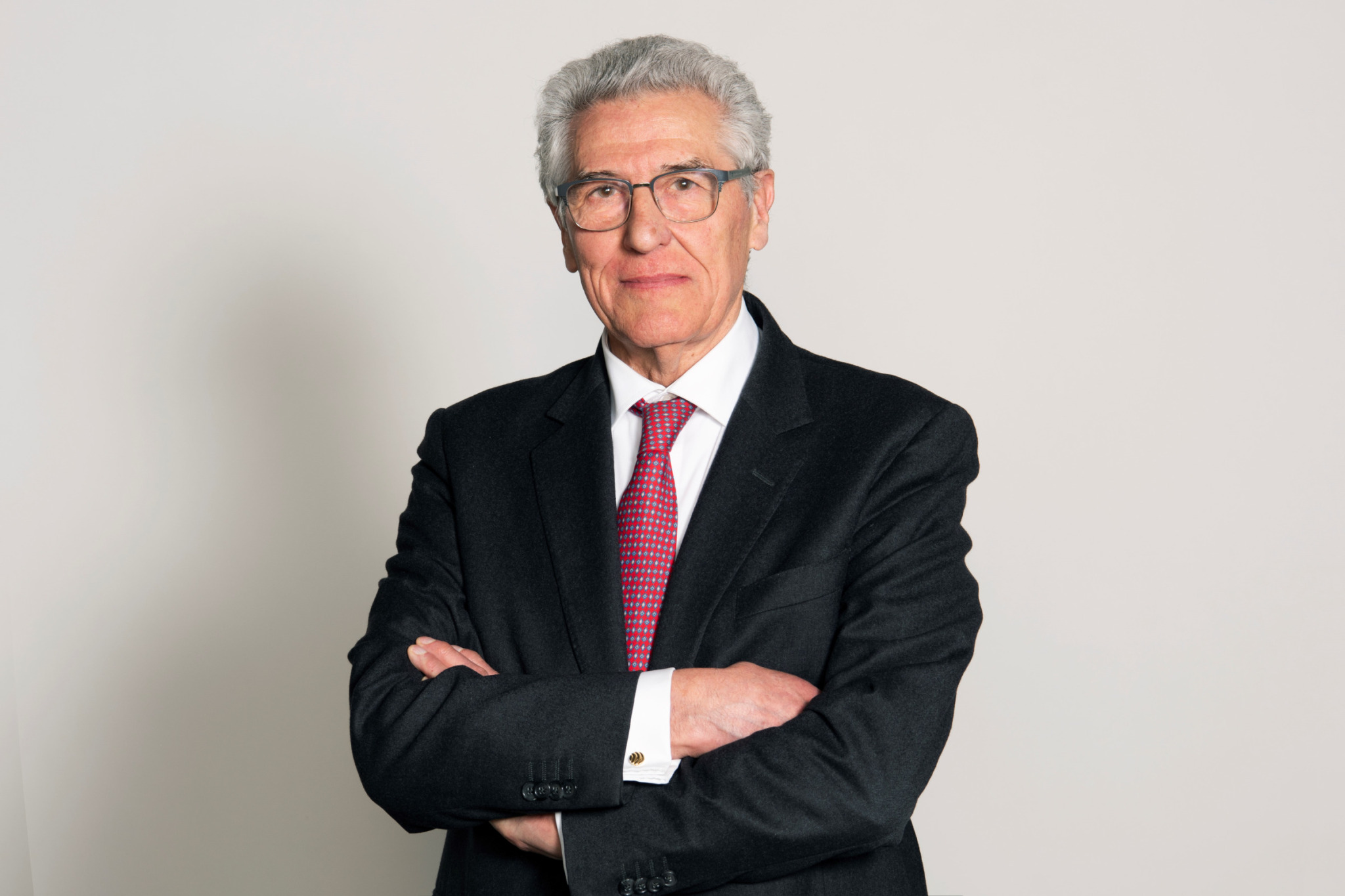



VIMM will soon celebrate its 30th anniversary. How does that make you feel?
“I feel a great sense of satisfaction because I see a challenging project that has grown over the years and has taken shape, even exceeding the initial expectations and the most optimistic forecasts in terms of results.
When Professors Pagano, Carafoli, and Schiaffino first presented the idea of VIMM to me—thirty years ago—it struck me as an excellent initiative, and I immediately approved it. I was therefore delighted to see that the project was embraced and realized by my successor as Rector of the University of Padua, Giovanni Marchesini.”
You later served as President of the Fondazione per la Ricerca Biomedica Avanzata. What has changed since then, and how do you view the Foundation today?
“The change is evident in terms of operational scale and outcomes, particularly in the growing number of scientific publications in internationally recognized journals. But I believe the true strength lies in the original vision, which was clear from the very beginning: a foundation in basic medicine with a strong translational focus—aiming to be socially useful and to contribute to scientific progress.”
Fondazione Cariparo is among the major supporters and donors of VIMM. Where does this commitment come from?
“From the very first day of VIMM’s creation, we have been enthusiastic supporters of this high-level scientific initiative—not only because of its intrinsic value, but also because it perfectly aligns with our statutory mission: to enhance quality of life and promote sustainable development within the communities where we operate, namely the provinces of Padua and Rovigo.
In this sense, scientific research is an essential component of the current stage of development of Italian society: since we cannot compete economically with countries where labor costs are significantly lower, we must position ourselves among those nations capable of standing at the frontier of science and technology.”
In your opinion, what are the key strengths on which VIMM has built its success?
“A highly selective recruitment process ensures the high quality of researchers coming from all over the world, along with a strong drive toward internationalization—starting with ongoing collaborations with leading global research institutions.
Another key factor behind VIMM’s success is its interdisciplinarity: while the core group of researchers is composed of biomedical scientists, the team also includes mathematicians, physicists, chemists, and engineers. It’s a true team effort that—when well-coordinated and guided in the right direction—leads to outstanding results.
Finally, the organizational model: through open spaces and the shared use of laboratory equipment, not only is the exchange of ideas and opinions among researchers encouraged, but significant savings in management costs are achieved—freeing up resources to invest in new technologies and equipment.”
Recently, together with Fondazione Telethon, you supported an important research project on rare neuromuscular diseases. What results do you expect from it?
“This is a project in which I have great expectations, especially regarding advances in basic research and deeper understanding of rare neuromuscular diseases. But not only that: knowing VIMM’s approach—reinforced in this case by the collaboration and support of Fondazione Telethon—my hope is that such research will lead quickly and effectively to tangible solutions for those suffering from these conditions.”
What more could be done to support research?
“To truly support research, we need to invest more—starting with young talents. In Italy, we have many highly skilled and well-trained scientists who, however, live and work abroad. That’s acceptable when it’s an exchange, but not when it becomes a one-way outflow. My hope and wish is that, thanks to institutes like VIMM, Italy can become part of a virtuous network of exchange and collaboration at the European and international levels.”
What message would you like to share with the readers of VIMM News?
“To the readers of VIMM News I say: be proud of this initiative. It was conceived with great volunteer spirit by its founders and has been carried forward with professionalism and enthusiasm by those who now lead the institute. Support it, because this is the path toward progress in science and the growth of Italian society.”
Before we say goodbye, is there anything else you would like to add?
“I would like to highlight the remarkable development and effort made in promoting the name and recognition of this institute. VIMM has succeeded in becoming part of the public consciousness—people now know they are dealing with a true gem that projects Padua onto the global stage of advanced research.
Credit goes to the entire team, of course, but I believe it is particularly important to thank the former President and Founder, Francesco Pagano, who remains the scientific soul of the institute, and the current President, Giustina Destro, who demonstrates outstanding skill and dedication in fostering research in Padua and, in particular, within VIMM.”