Home > Persone > Marco Sandri

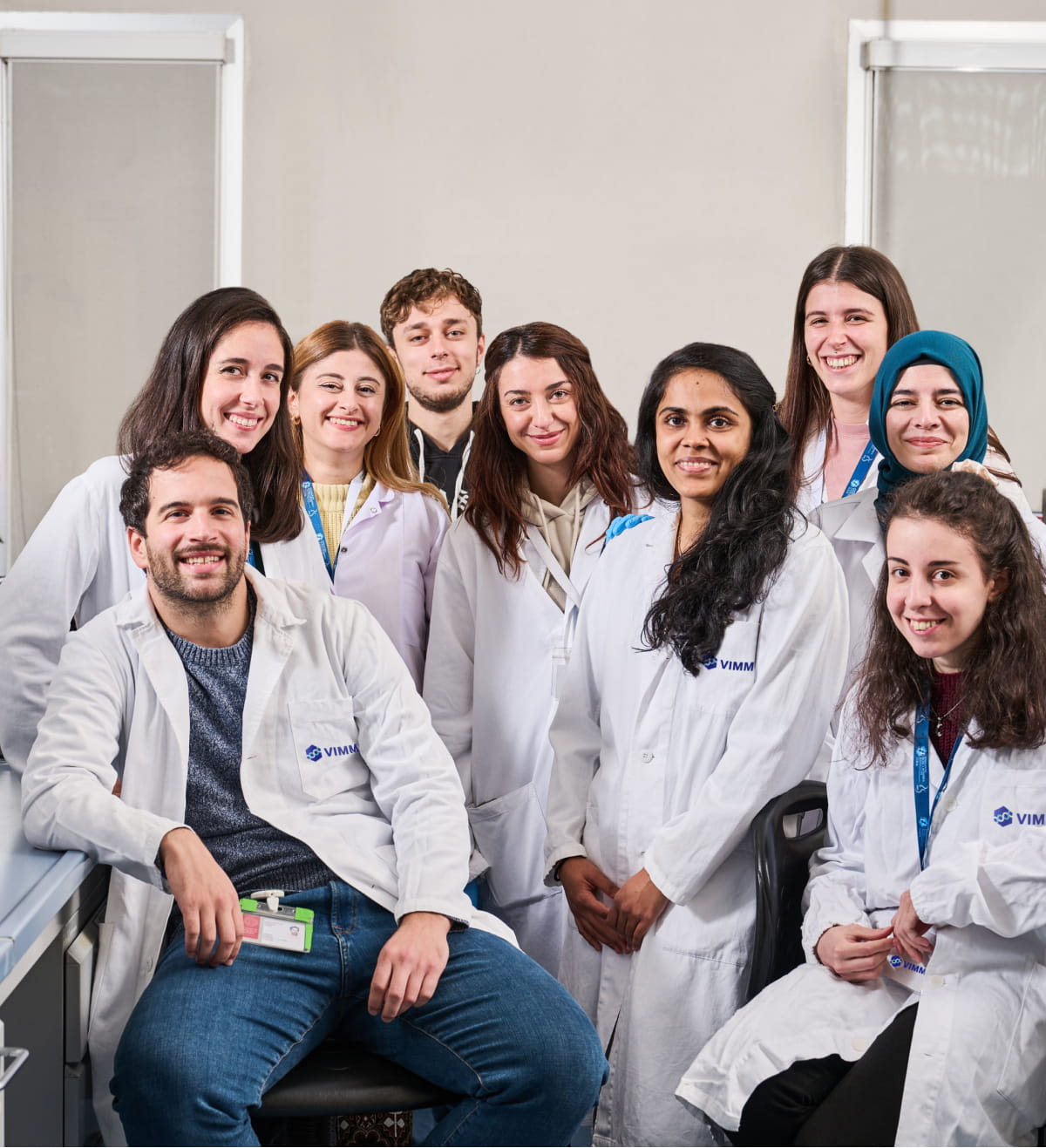
Marco Sandri leads a laboratory specializing in the study of muscle health and disease. His research helps to understand how to preserve muscle mass and prevent conditions such as atrophy, sarcopenia (age-related muscle loss), and cachexia (severe wasting associated with cancer). Thanks to his work, new potential targets for future therapies have been identified. His laboratory combines biology, genetics, and medicine to translate research into concrete solutions for patients.
Marco Sandri’s research focuses on understanding how muscles maintain their mass and strength, both under normal conditions and in the presence of disease or aging. His group has discovered important mechanisms that regulate muscle loss or growth and has demonstrated that certain cellular processes can be activated to improve symptoms of diseases such as muscular dystrophies. These discoveries have also led to clinical studies based on nutritional strategies. More recently, he has been studying how muscle communicates with other organs, its role in maintaining overall health, and the genes linked to longevity. The laboratory is supported by national and European funding.
C16ORF70/MYTHO promotes healthy aging in C.elegans and prevents cellular senescence in mammals.
PHAF1/MYTHO is a novel autophagy regulator that controls muscle integrity.
Implications of mitochondrial fusion and fission in skeletal muscle mass and health.
Role of autophagy in muscle disease.
2001
Specialization in Pathology
2005-2010
Telethon Researcher - Istituto Telethon Dulbecco
2006-2013
Researcher - Università degli Studi di Padova
2006 - present
Principal Investigator - VIMM
2010 -2015
Telethon Researcher - Istituto Telethon Dulbecco
2011 - present
Associate Professor - McGill University, Montreal, Canada
2013 -2014
Associate Professor - Università degli Studi di Padova
2013-2015
Principal Investigator - Telethon Institute of Genetics and Medicine (TIGEM)
2013-2019
Director of CIR-Myo, Interdepartmental Research Center of Myology - Università degli Studi di Padova
2014 - present
Full Professor - Università degli Studi di Padova
2015 - 2019
Deputy Director of the Department of Biomedical Sciences - Università degli Studi di Padova
2019 - 2023
Director of the Department of Biomedical Sciences - Università degli Studi di Padova
1997
“Luigi Casati” Award, conferred by the prestigious National Academy of the Lincei.
2003
Winner of the “Terme Euganee” Award for research on skeletal muscle regeneration, reconstruction, and engineering
2005
Telethon Career Award – Assistant level, Dulbecco Telethon Institute
2010
Telethon Career Award – Associate level, Dulbecco Telethon Institute
2023
Alfredo Margreth Award for Muscle Biology and Pathophysiology, conferred by the National Academy of the Lincei, the oldest scientific academy in the world
2023
Leader in Biology and Biochemistry Award, granted by Research.com, which ranks the world’s top scientists in the fields of biology and biochemistry
2024
One of the World’s Most Cited Researchers 2024
Support Our Research